
-
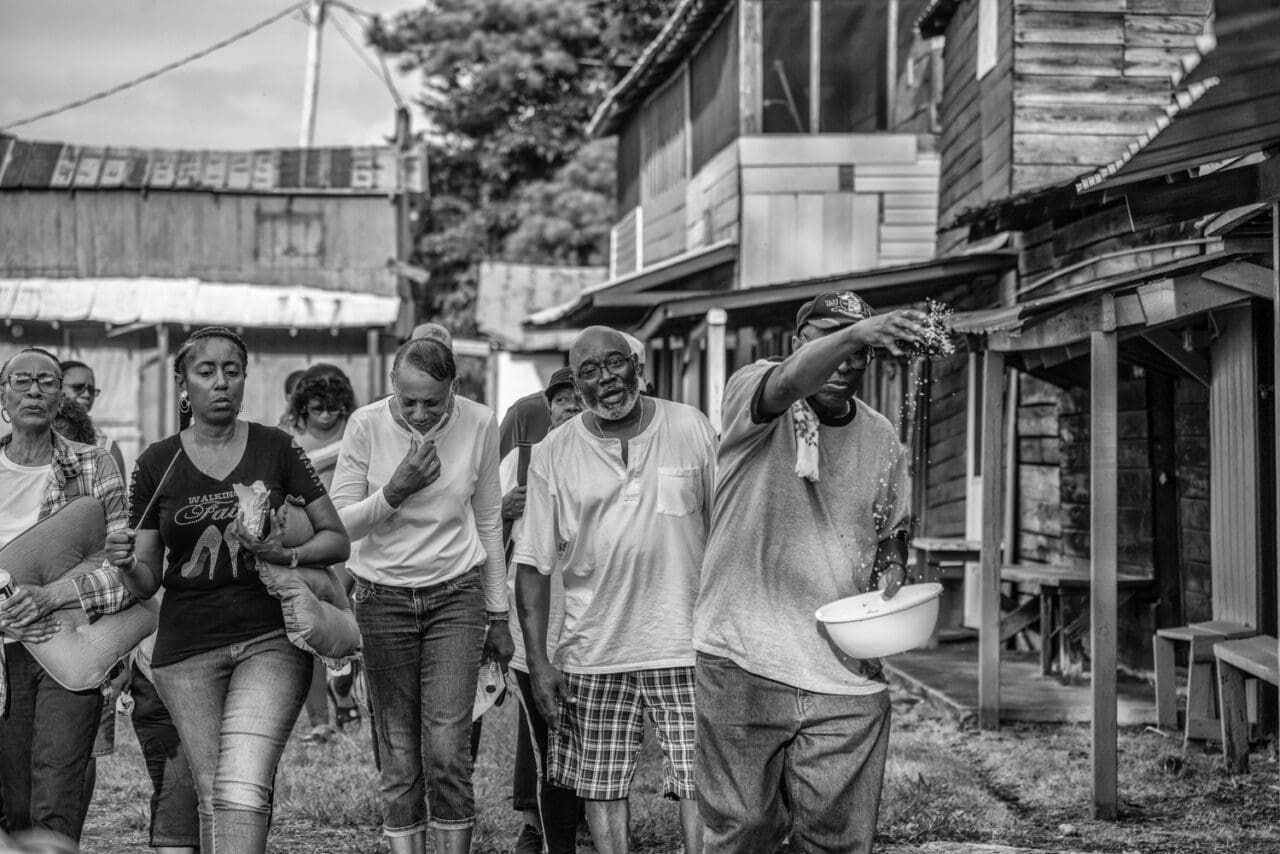
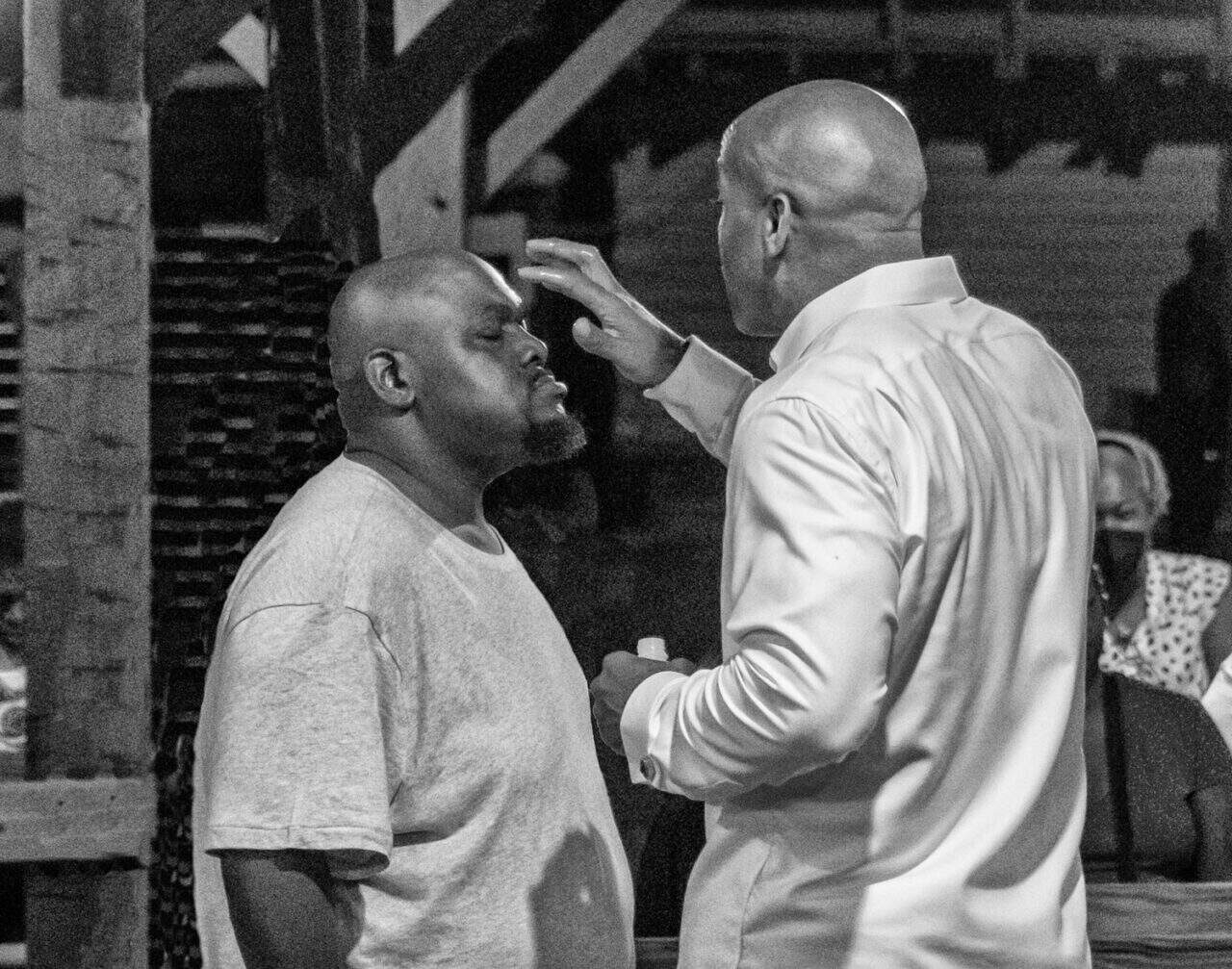
Blessing of the Grounds Reverend Albert Perkins, Sr., during his 35 years of serving six churches in the same circuit, established the tradition of blessing the grounds. “I wanted an observance that would celebrate not only the sacredness of the Arbor but of the entire campground. Initially, only a few joined in, and then many more followed. The children would get caught up in the excitement of the procession and join in as well! We performed the ritual by sprinkling oil and water in front of the tents to demonstrate that the Holy Spirit was dispersed over the entire camp meeting ground.
-
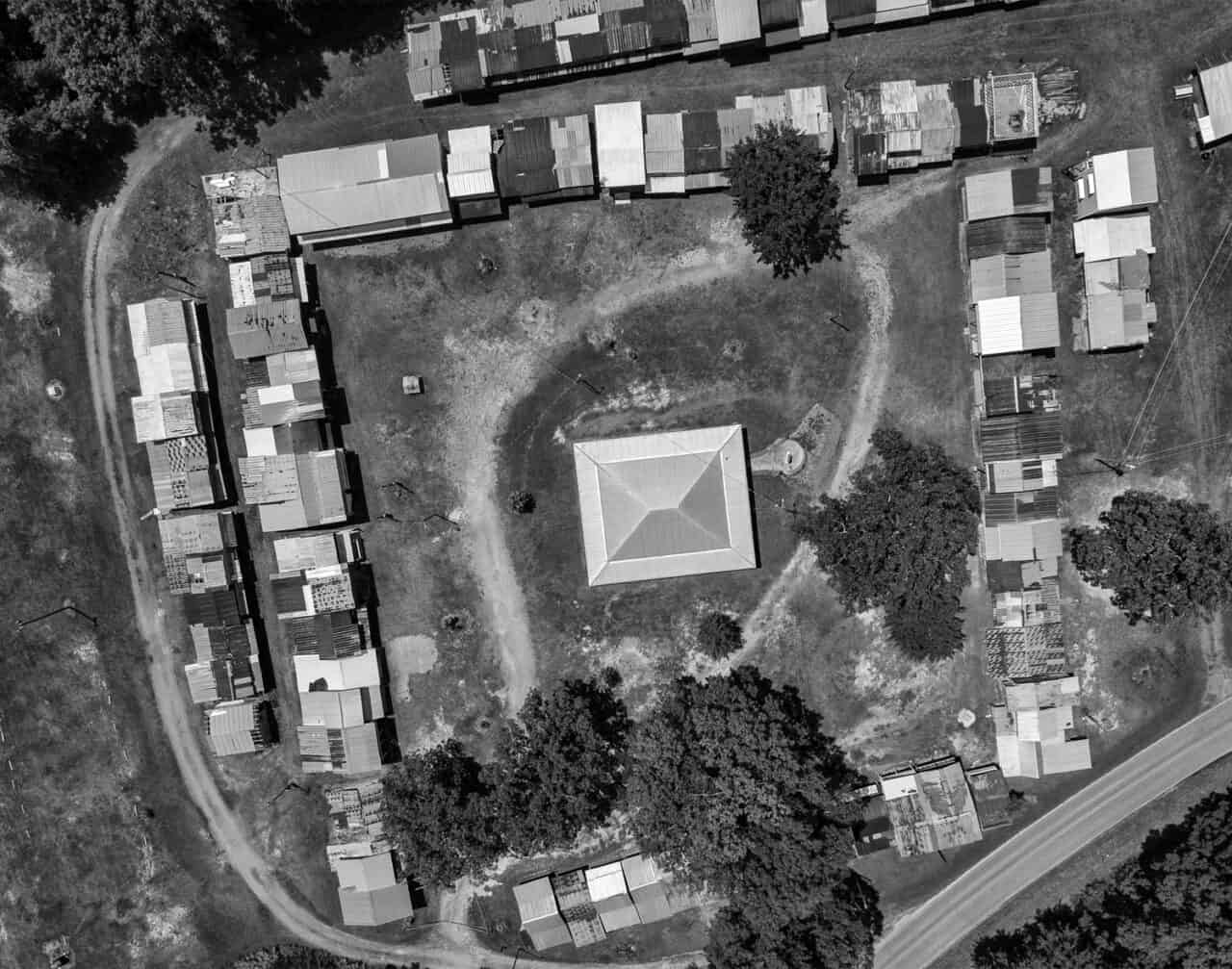
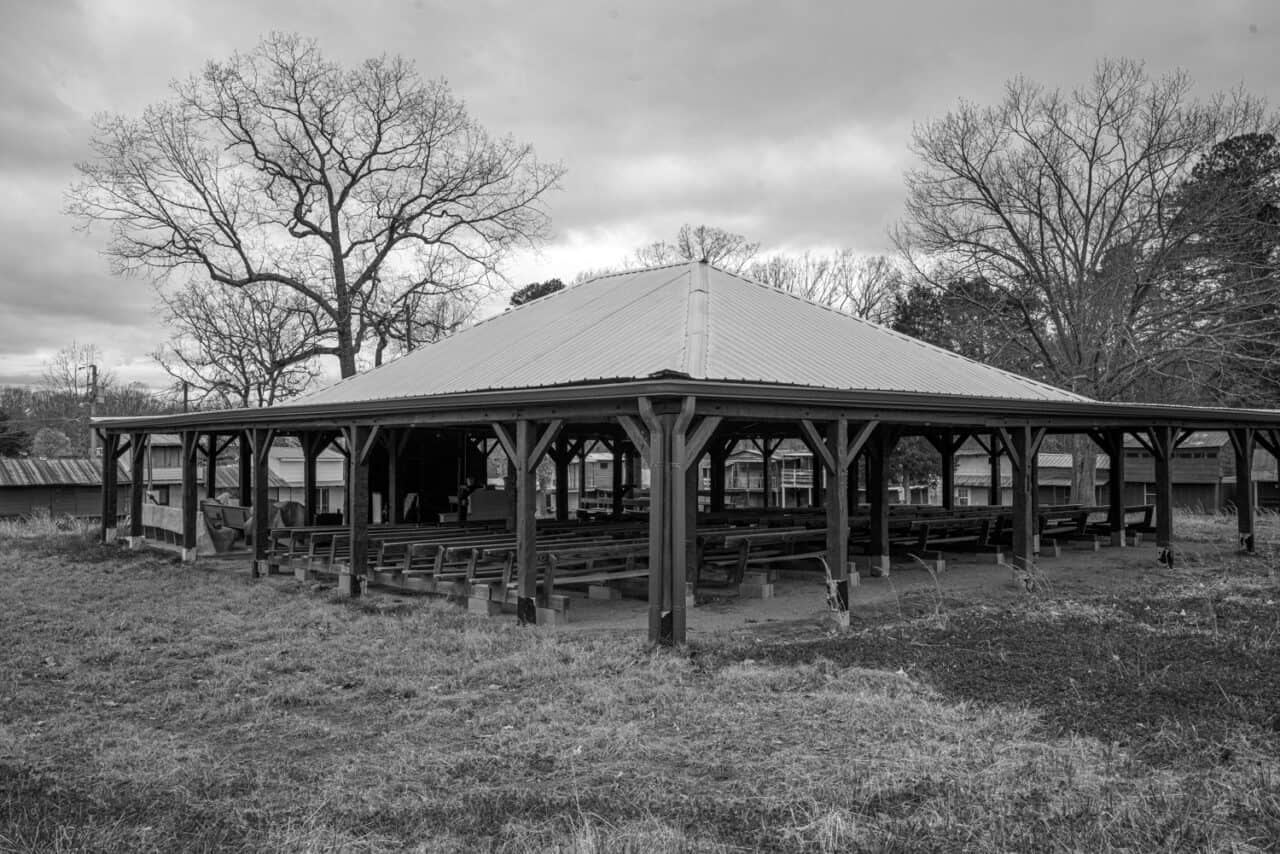
Aerial View The aerial view is the historical representation of the evolution of tent construction around a central worship center - the Arbor. There are presently 102 "tents".
-
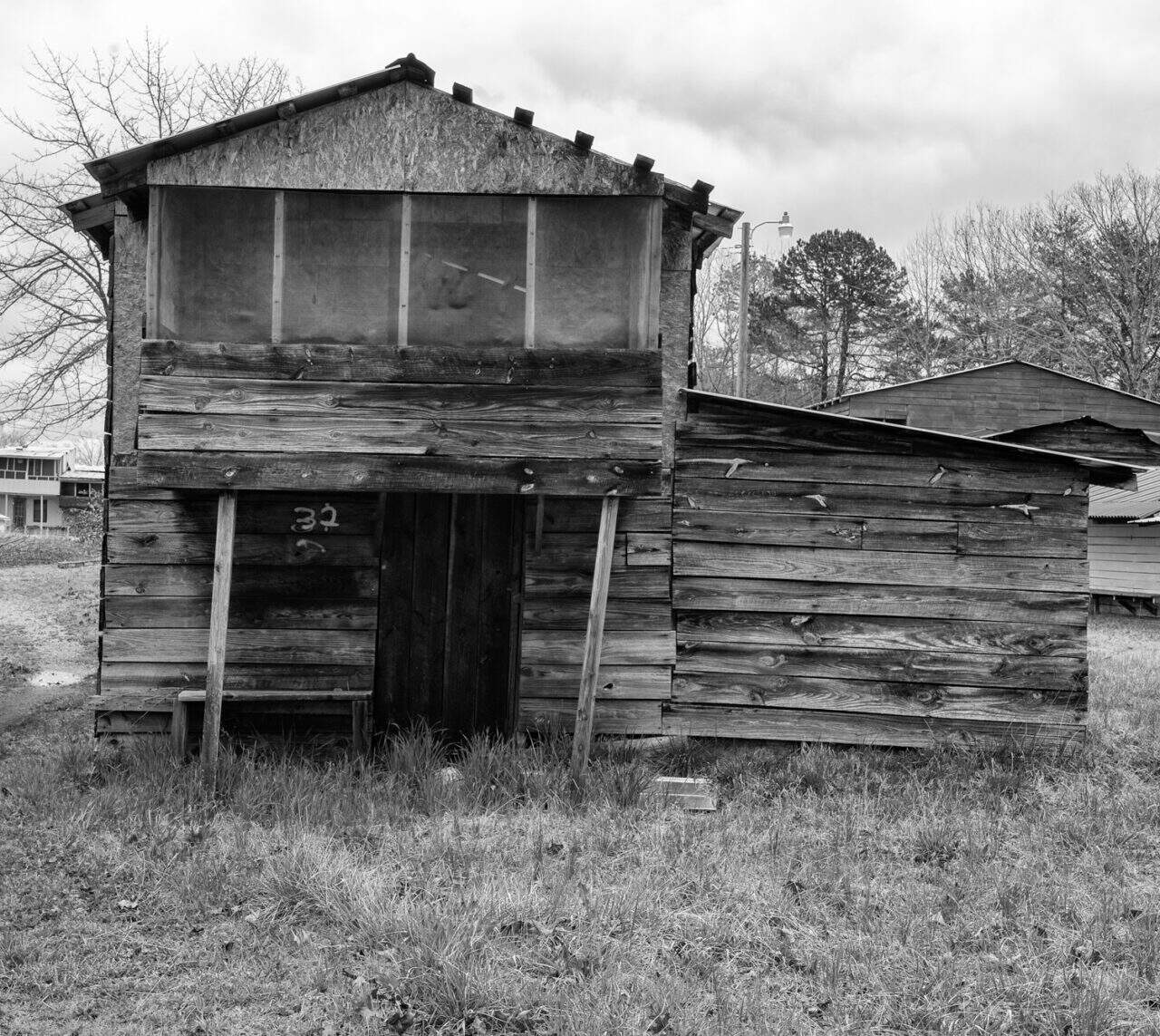
"Tent" is a verb
The "tents" in their earliest form were constructed of canvas (late 1800s). Now, they are constructed with shared, single-board-thickness walls. The floors are covered in sawdust. -
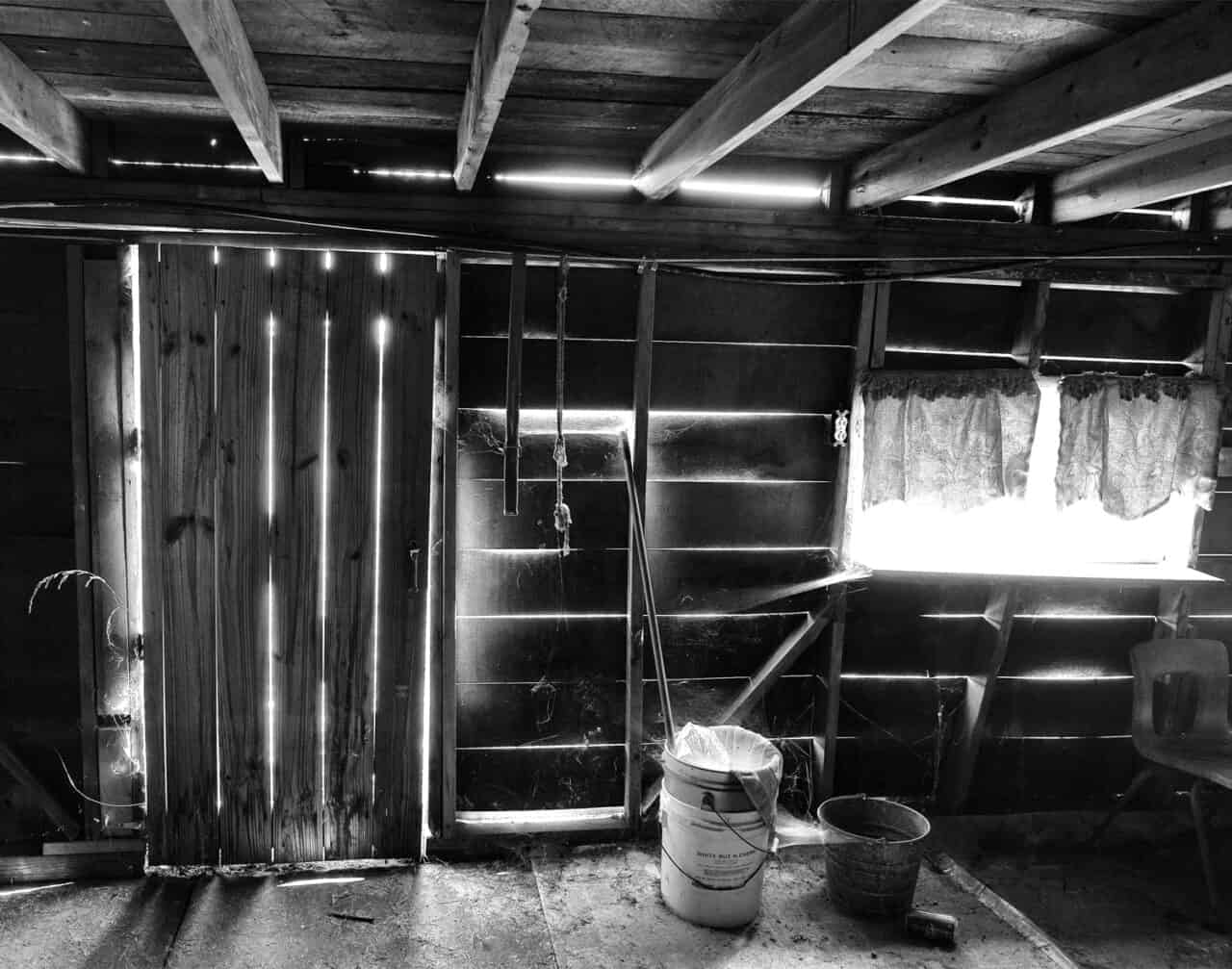
Thin Walls
Thin walls, which are often one board thickness, are shared walls with an adjacent tent. -
tents
-
-
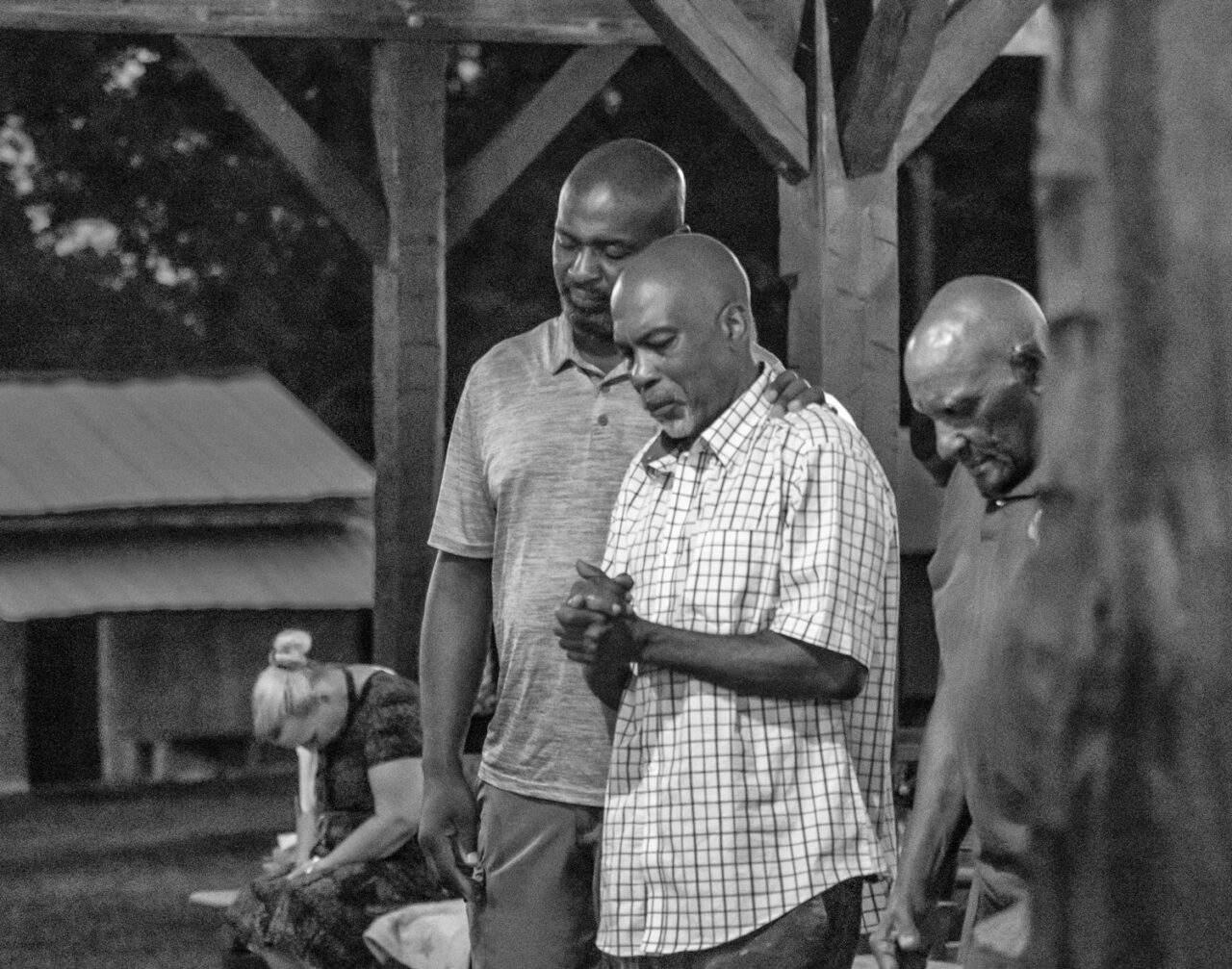
Call to the Altar
The call is a ritual in which the "sinner," accompanied by a trusted friend, comes forward to the altar to publicly confess their sins. The congregant praying in the background is a noteworthy gesture. -
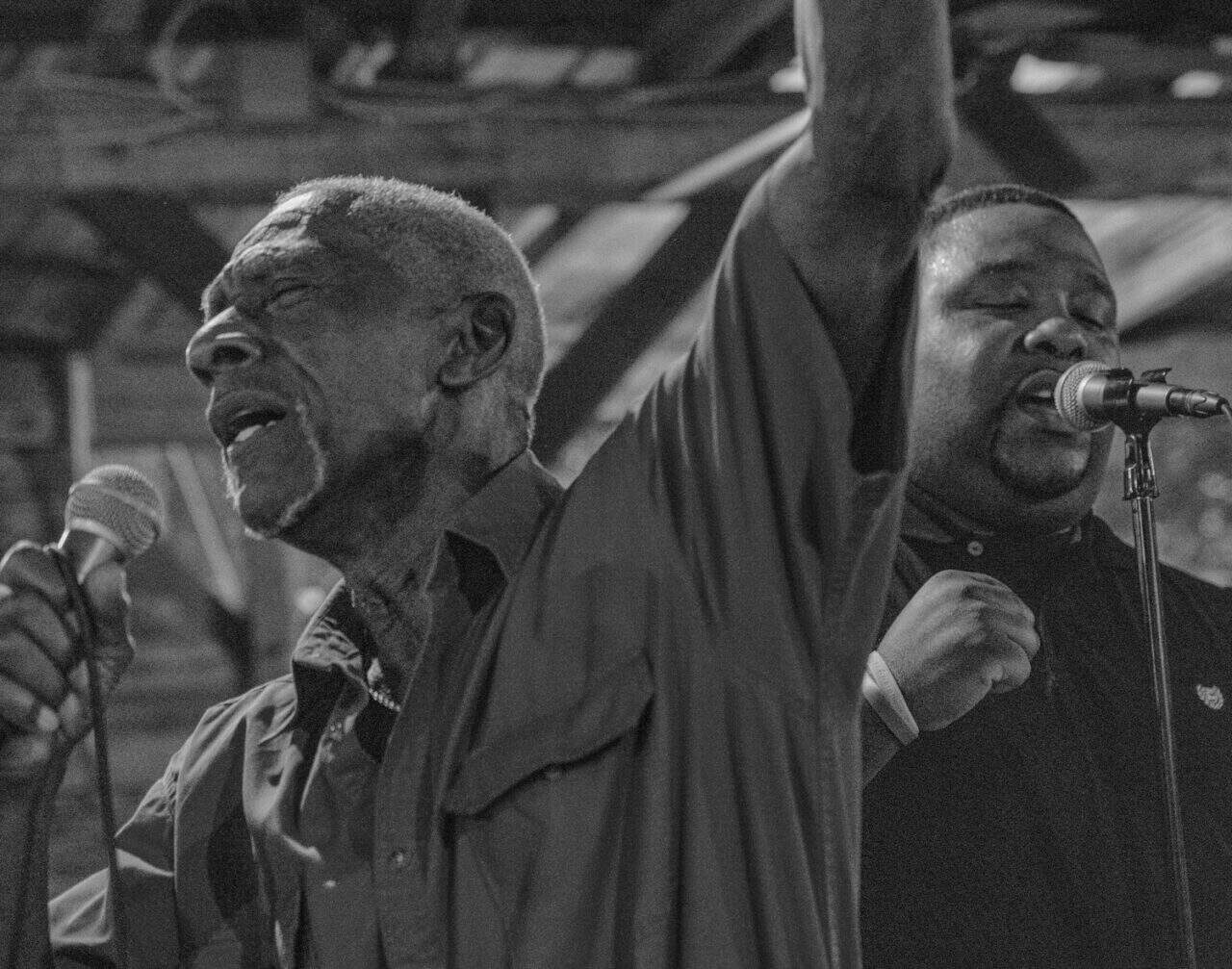
The QJ's
Local spiritual bands from the community are assigned to one of the eight evenings of the camp meeting to lead the singing component of the evening program. Music prepares the congregants to "receive the word." -
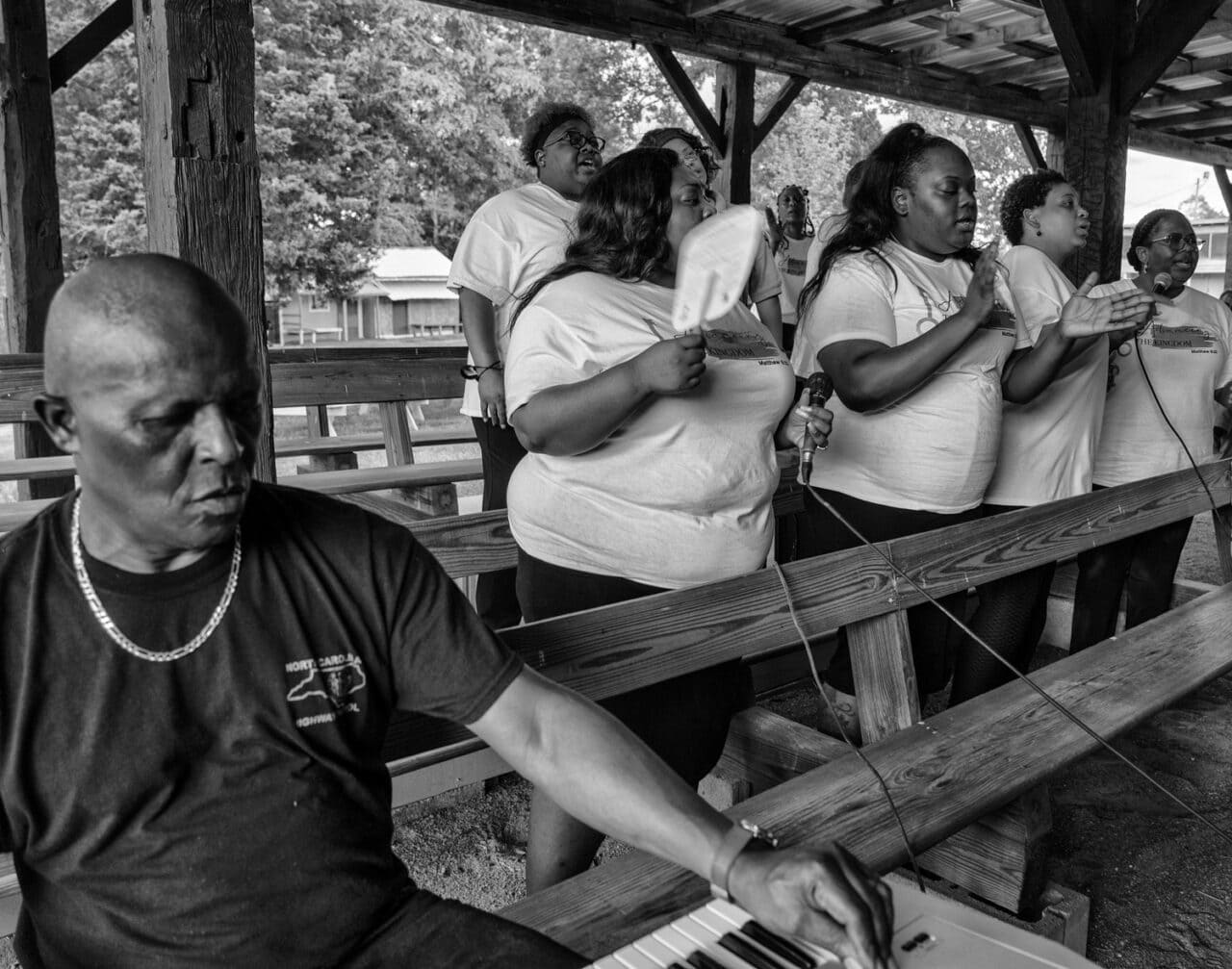
Trustee keyboarder and the Tucker's Grove Church Choir
The keyboard is the omnipresent musical instrument in today's camp meeting worship. In the early days, the songs were sung by acapella. -
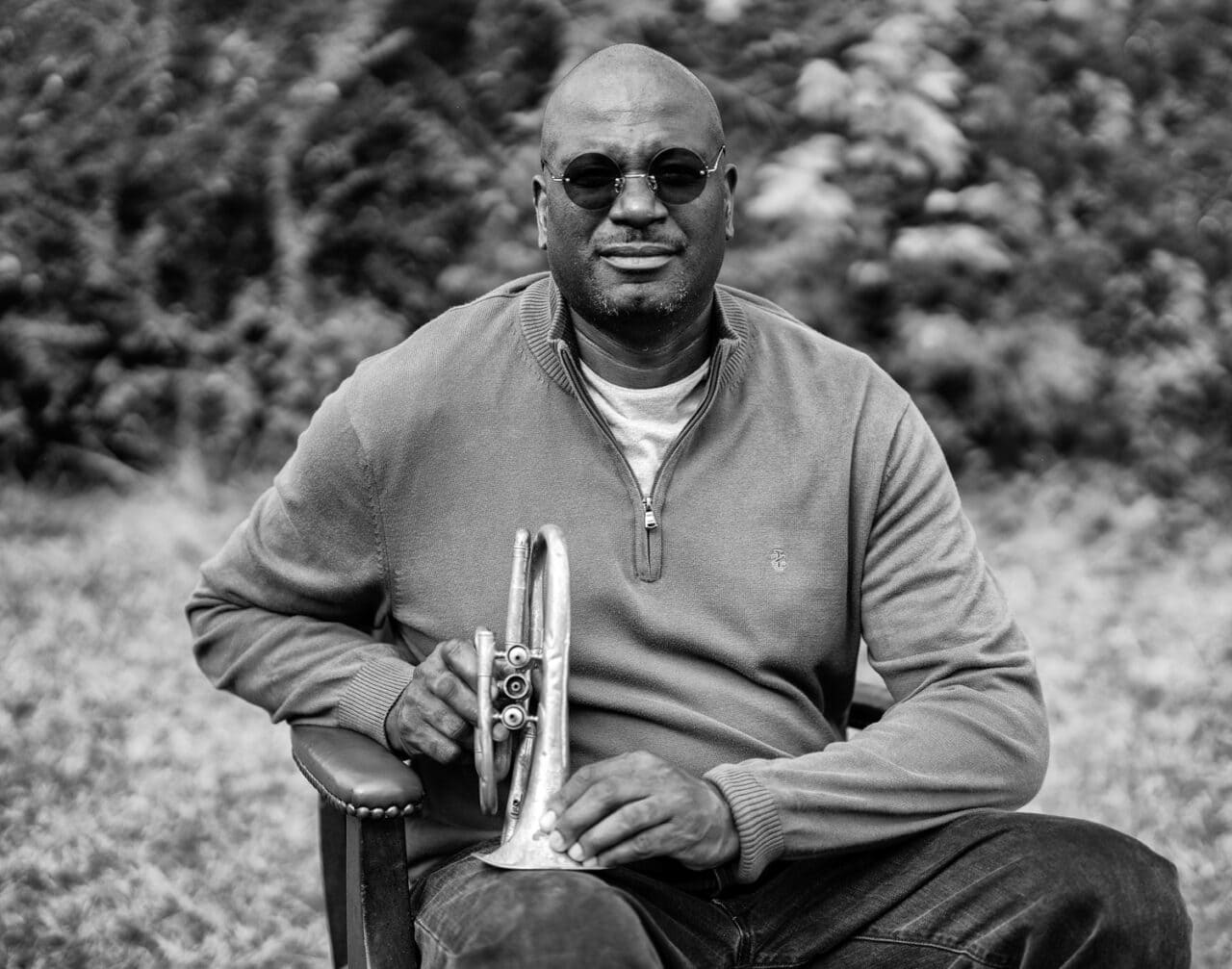
The Bugle
The bugle served as the call to worship. Cecil Edward Jackson, Jr.'s (b. 1968) granduncle, "Ulys," played his bugle in the 1920s to call the congregants to the Arbor. The bugle is no longer playable, but it is an important historical artifact of the times. -
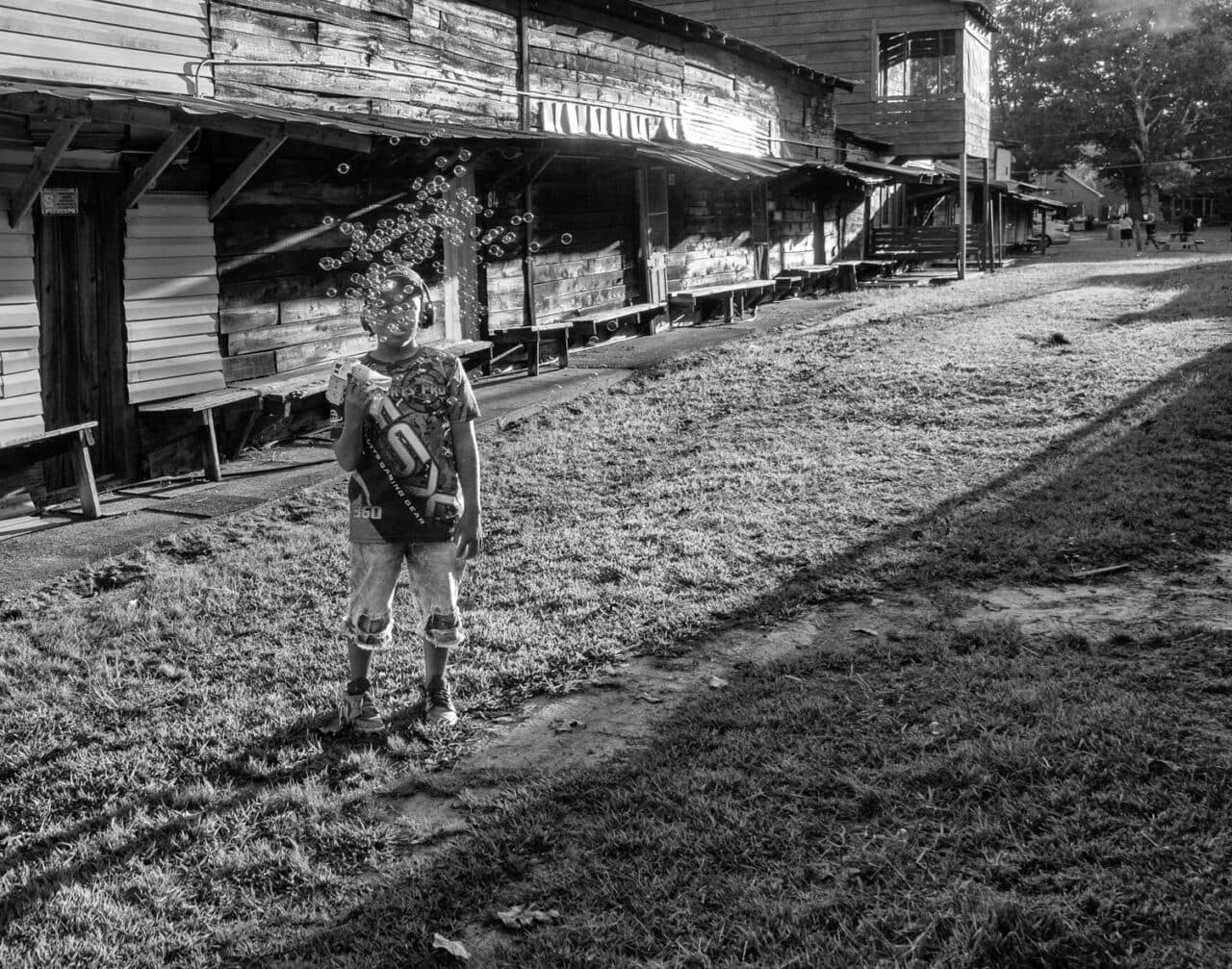
Up the Aisle
"Up the Aisle" refers to the passageway to the concession area of the camp meeting. This corridor is a favorite escape route for young people to evade the watchful eye of supervising older family members. -

Served with love and joy
Katherine Anderson grew up attending camp meetings as a child. Now, as an adult, she owns one of the concessions where all of her food is proudly served with "love and joy." Food creates the opportunity for higher-level conversations about life, which she is eager to share. -
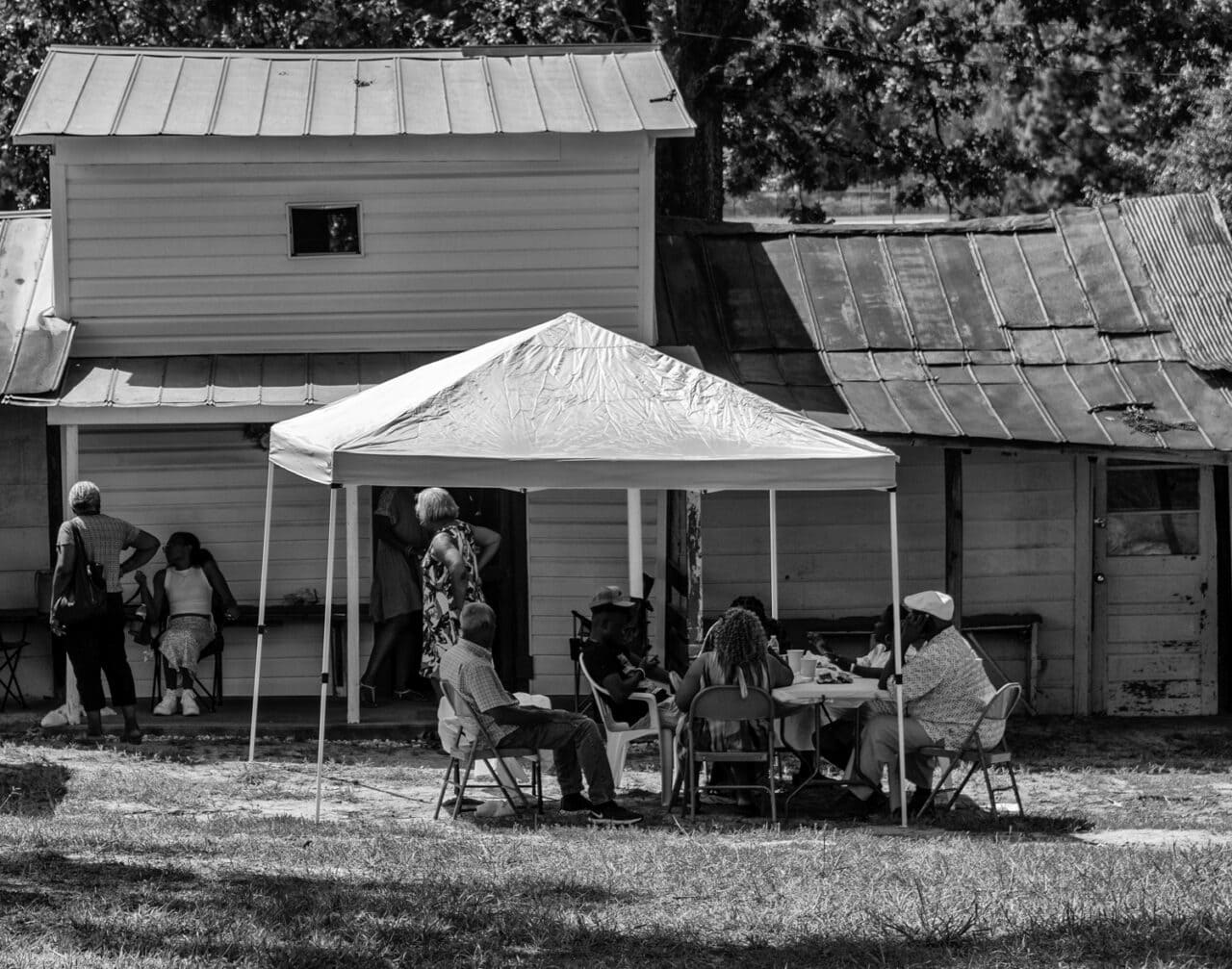
The Camp Meeting Occasion
Camp meeting occurs every year during the layby, a time in August when the spring and early-summer crops are not yet ready for harvest, and it is not yet time to plant fall crops. Eleven days experientially became the ideal length for the camp meeting, with preaching and singing nightly building to a crescendo on the final day - Big Sunday! In the past, Big Sunday was an occasion when families pulled out all the stops with a Thanksgiving-style presentation of food and fashion. Automobiles were polished, shoes were spit-shined, and families dressed in their finest for the last heart-wrenching sermon of the week. -
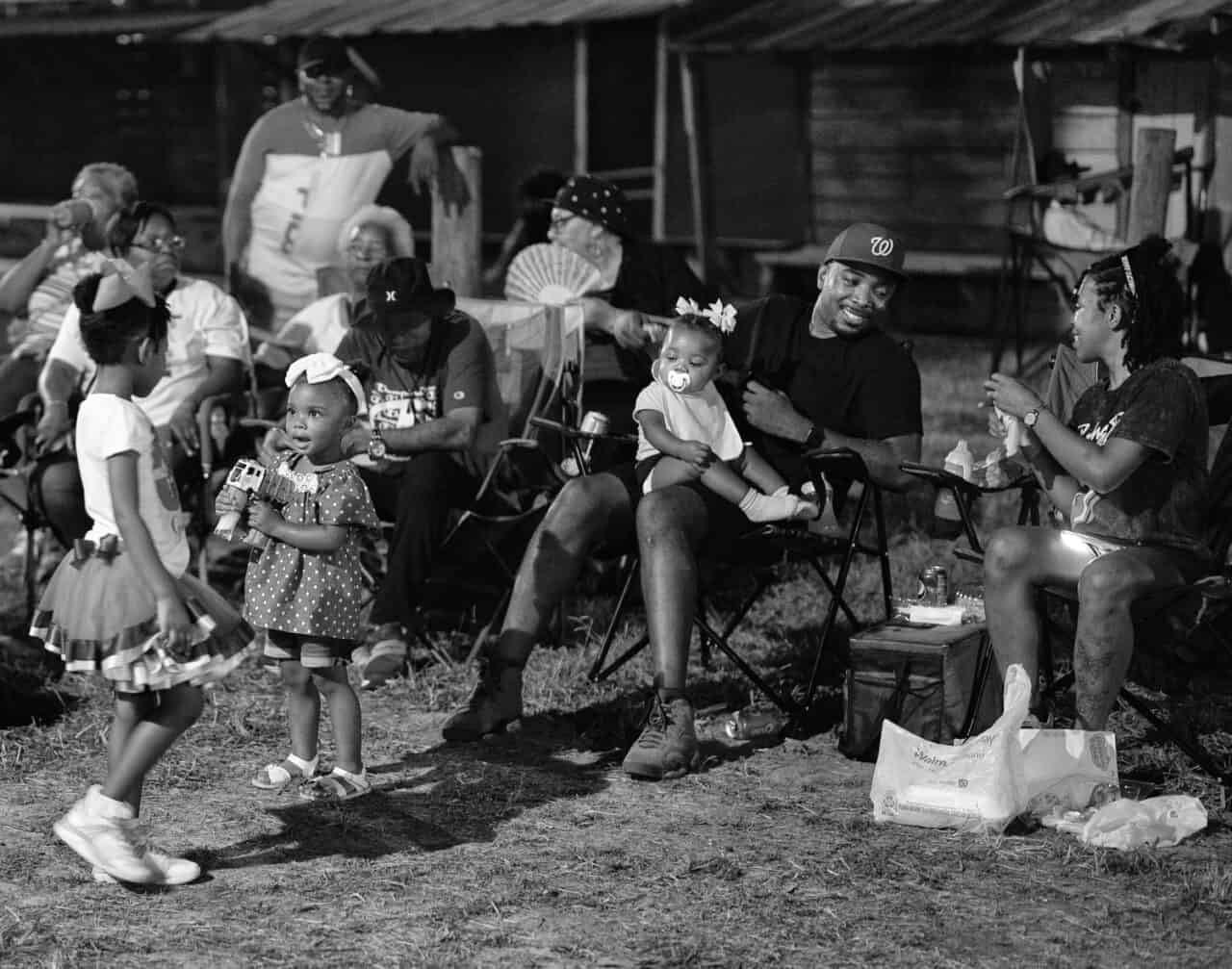
Big Sunday was a time to see and be seen.
The celebration extended well into the night, when attendees would collapse in their cars for the drive back home or in the beds of their family tents, and to awaken the next morning for the final cup of breakfast coffee. -

Big Sunday, Three Generations
Bragging rights come with how many generations of family members can be stacked or represented outside the tent. -

A common warm memory of adults who grew up at camp meetings was being there as a kid. “We played from sunrise to sunset; we had the best time. Invented our own games, and many of which involved a ball. We felt safe.” The watchful eye of responsible adults ensured safety because the grown-ups knew who all the children belonged to. Behavior rules were generally agreed upon, but they became stricter when a child crossed into another family’s domain, such as their front yard or living room. Clergy and parents constantly reminded children with ritual and words that they were at camp meeting to remember their Creator. Special services were prepared and explicitly directed to the youth. There was something for everyone. As the sun lowered in the sky, the young adults became emboldened and sought out the intimacy of the shadows.
-

Video Games! Oh no!
Discrete and not-so-discrete video games under the Arbor are a distracting nuisance, even in modern times. -
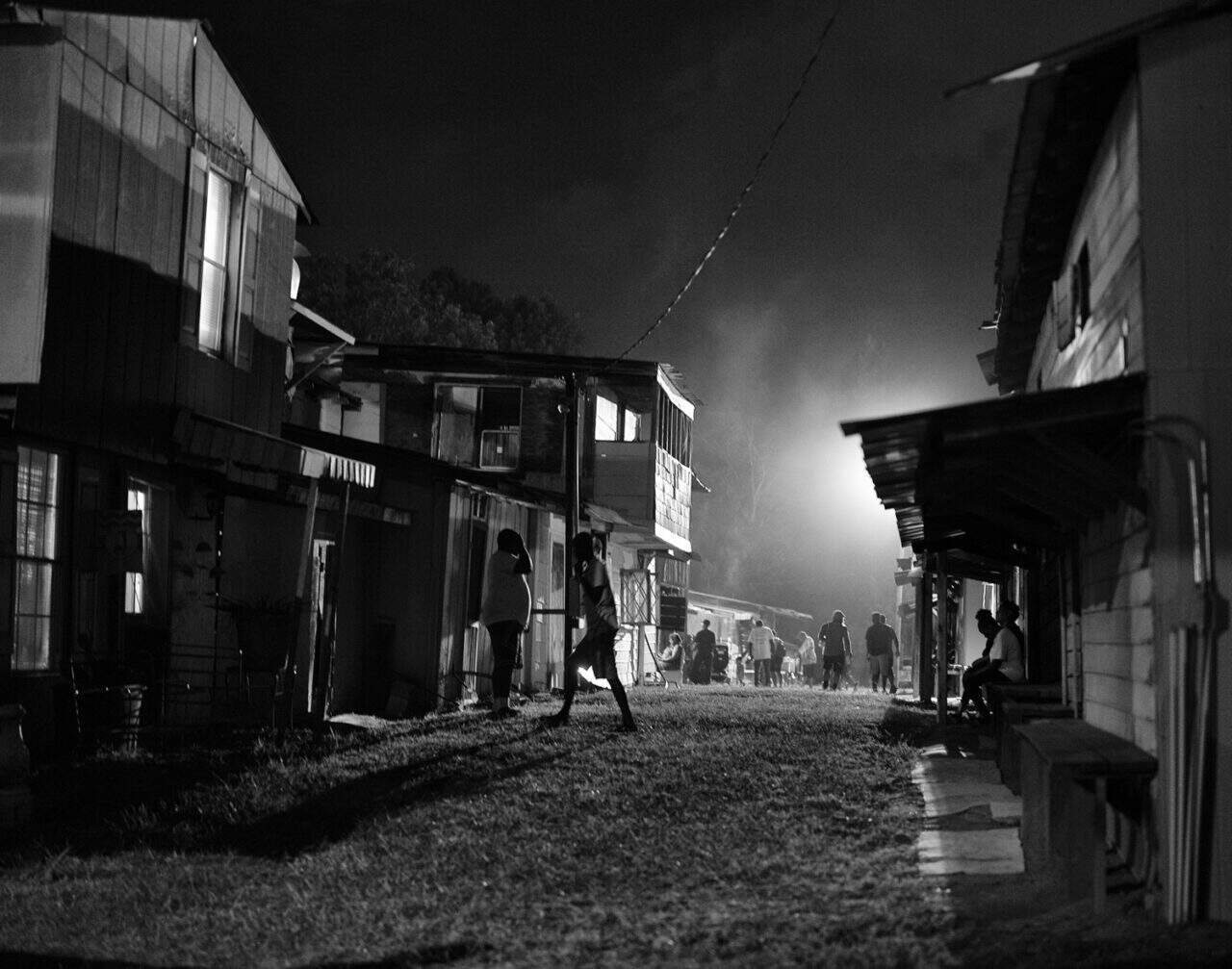
Nighttime at Camp Meeting
The day does not end with the setting of the sun. For some congregants, this is when the day begins. -
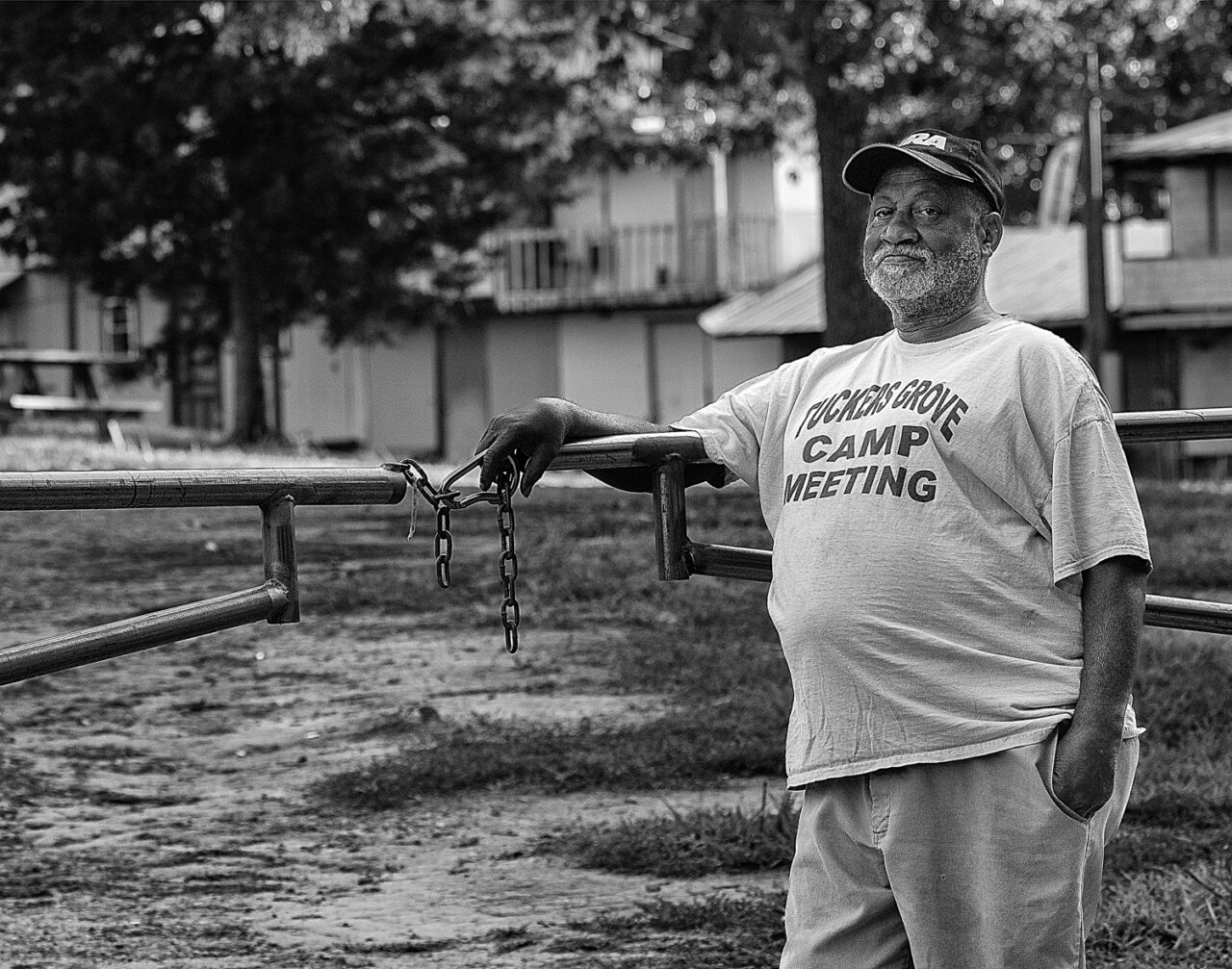
St. Peter's Gate
In olden times, the Arbor and tents were surrounded by livestock. With the advent of the automobile, the area around the Arbor and in front of the tents became filled with cars and children. These two elements were deemed incompatible, which caused the trustees to eliminate automobiles entirely from the inner camp meeting spaces. A gate and an attending trustee are used to enforce this policy.
Sacred Ground
The year was 1874, less than a decade after the end of the Civil War. The month was August, during the “layby,” when the summer crops were not mature enough to be harvested, and the fall crops were not ready for planting. The location was the corner of a plantation farm between the Old Plank Road and the mighty Catawba River in eastern Lincoln County, North Carolina. A small group of ex-slaves and free slaves had convened to renew and strengthen family ties and worship Jesus Christ.
Their shelter was a brush arbor constructed in a dense grove of trees, which provided cover from the hot summer sun and from predictable late-afternoon summer showers.
They camped out one night, probably more. They cooked over open fires. Chants, spiritual songs, and the praising rhetoric of itinerant preachers were the sounds that enveloped their first camp meeting.
This practice persisted for over 150 years, except for three years: two from COVID and one from polio.
The story of the Tucker’s Grove Camp Meeting Ground, a National Register landmark, has only now been exhaustively recorded by documentarian Houck Medford.
